An Offering
A note on timing. Aligning with purpose.

As it happens, I have had this newsletter 95% done and meant to publish it over a month ago. Alas, it is being completed in perfect order. Timing.
The expansive, twirly feeling of inspiration. The gut-punch of peeking behind the curtain and acknowledging the truth of despair. And yet, the knowledge of a solution. The wisdom of hope. What Good Shall I Do? As I integrate the Force of Nature Conference at Roam Ranch, I ask myself this question. Sometimes, it can seem like only a miracle will do any good. My mind careens towards the big ideas and massive solutions. A New Paradigm. Damn. That sounds big. You know I’m game but like, how?
What if, the answer was actually really small? The solution simple? Everyday moments. Big things are good when they give us hope, but big things can make us feel like us as individuals have no power. And as I’ve been contemplating and thinking and praying, asking myself ‘What Good Shall I Do?’ The universe answered back….

Stay with me as we go back in time a bit. My last newsletter I wrote about my hair cutting ceremony and honoring my mom and my lineage. Because I was doing research on the culture of hair and different offering ceremonies, I was reminded of the book Braiding Sweetgrass by Robin Wall Kimmerer. I have a copy and had started reading it many years ago, before I was even into any of this agriculture stuff, but I didn’t get very far in reading it. According to my green highlights in the book, about 3 chapters in. I cannot remember my little brain and spirit back whenever I started this book, but there is no way in hell I would have absorbed it and been able to understand it the way that I can now. Timing.
Fast forward about 3 weeks and I’m attending the conference. This one felt different. It felt different in me, but also in the conversations and speeches given, in the stories told. There was more Spirit, more beauty. Like people who have been working in this space have moved from understanding a thing intellectually to understanding it from a deeper place, a more intuitive and embodied place; from mind, body, emotion, and spirit. Talking more about a regenerative mindset in the way we do all things. A recap and cliff notes of some of the more spirited and embodied speakers that sparked something deeper in my soul:
Reginaldo Haslett-Marroquin, founder of Tree Range Farms and a native Guatemalan, discussed an innovative poultry-centered system looking at how chickens evolved in jungles and the important observations of their relationship with trees.
“Becoming Indigenous to a place” - at one point we were all immigrants. So how do we become indigenous to a place? It is through actions of reciprocity, the give and take with the land, by forming relationships.
Regenerative is a way of relating, it is energy stewardship - Colonization is extraction for no purpose and no end.
Chickens evolved in jungles and we observed their relationship with trees - hazelnut trees and the cycling of nitrogen.
You can’t learn about it in books, you have to observe it, form a relationship to it.
Tre’ Cates, founder of nRhythm, discussed a regenerative methodology for organizations and institutions.
Regenerative management in organizations and operations.
The dominant model of our current approach is the machine - using power to apply forces to control movement in order to perform an intended action.
Myth of efficiency - most of the workforce is disengaged and we are in a huge health decline - that’s not efficient.
Creating the conditions associated with more life - working with living systems, allowing for emergence - healthy conditions create abundant outcomes.
Realizing that people are the energy source of organizations - back to energy stewardship.
Asking “What do you think the conditions were (or need to be) for that to emerge?”
Alejandro Carrillo, a fourth-generation rancher in the Chihuahuan desert, discusses how he can carry 8+ times more cattle than neighboring ranches without inputs in a desert climate that receives little precipitation.
Deserts are beacons of hope and potential.
The importance of observation, and building relationships with the land, you’re always getting feedback.
Weeds are healers, the first things to appear - As you change the conditions those will go away. Nature says “you don’t need that anymore” - if you just continue to try and get rid of it without changing the conditions, it will always come back over and over again.
Herd density is the most important thing in the beginning, we need more grazing animals to regenerate deserts, not less.
Adam Russel, Co-owner of Symbiosis, discussed the principles of biodynamics and how to release the potential of under-utilized lands with the earth and the atmosphere.
Biodynamics is the practice of increasing the complexity of the system - giving the plants and soil what they need to do what they need to do.
Being in a receiving mode when working with your land - sensing and feeling, not thinking. Being in harmony with the daily and yearly cycles.
He touched on the language we use, how we ask the land and introduce ourselves and our intentions. The use of Sanskrit, as it’s a language based on the geometry of sound - other species can speak that language too.
And simultaneously I’m reading Braiding Sweetgrass:
“Our relationship with land cannot heal until we hear its stories. But who will tell them?”
“Humans have the least experience with how to live and thus the most to learn - we must look to our teachers among the other species to guide us.”
“The plants can tell us her story, we need to learn to listen.”
Our stories are ways that we orient to the world. We must be able to imagine a different relationship with Earth. One in which people and land are good medicine for each other. How can we move towards regeneration if we cannot even imagine what that path feels like? For this we need new stories. Many of us nowadays are inundated with stories about degradation and destruction. But in order to imagine new possibilities, we need stories and examples that give us hope. That’s what the macro solutions and big ideas can do. Hope. Swimming in the divine rather than drowning in the mundane.
But then when it comes to healing our relationship with land and listening to her stories, that can happen in everyday moments. In the way we relate to the things around us. Fast forward again to this past weekend. I’m a few chapters into Braiding Sweetgrass, it’s one of those books that’s a dagger to the heart in the best way. Every page like the deepest poem, you have to take a breath to let it fully hit you. Chapter 6, Learning the Grammar of Animacy:
“Yawe, To Be.”
This chapter was a wink from the universe. It’s not the first time I’ve heard this concept. Daniel Firth Griffith writes about it in his book Wild Like Flowers. Like Yahweh from the Old Testament, this expresses what it means to be the offspring of Creation. To speak of those possessed with life and spirit.
Instead of asking ‘What is that?’ Indigenous languages ask ‘Who is that being?’ Instead of masculine/feminine grammar, it’s animate/inanimate grammar. Almost everything of the natural world is seen as animate - rocks, trees, flowers, bears. Mostly only things made by humans were inanimate - table, bowl, spear. Acknowledging the breath of life that pulses through all beings. This type of language reminds us, in every sentence, of our kinship with all of the animate world.
The very same day that I’m reading this chapter, I came across a lost dog running around in my neighborhood. When I first tried to get ahold of her, she took off. I prayed that she was safe and kept about my day. A few hours later, I see her huffing and puffing underneath a bush, clearly out of sorts and lost. Again I tried to go up to her, but she was flighty, so I backed off and just sat near her for a while, telling her she was ok and I was there to help. I talked to her for quite some time, then as I got up to leave, she came right up to me. Eventually I got her to follow me back to my house, no leash or collar, she just followed. I didn’t know what to do and was ill-equipped for any animal care at my house, but I wanted her to at least have a safe place for the night. The next day was a frustration of calling shelters and animal protection and several closed veterinarians (it was a Sunday). I had no dog food so she was spoiled with raw caveman chicken blend, raw eggs, and bone broth. Finally I posted on a local Facebook lost pets group and found her owner! She is back safe and sound with her family.
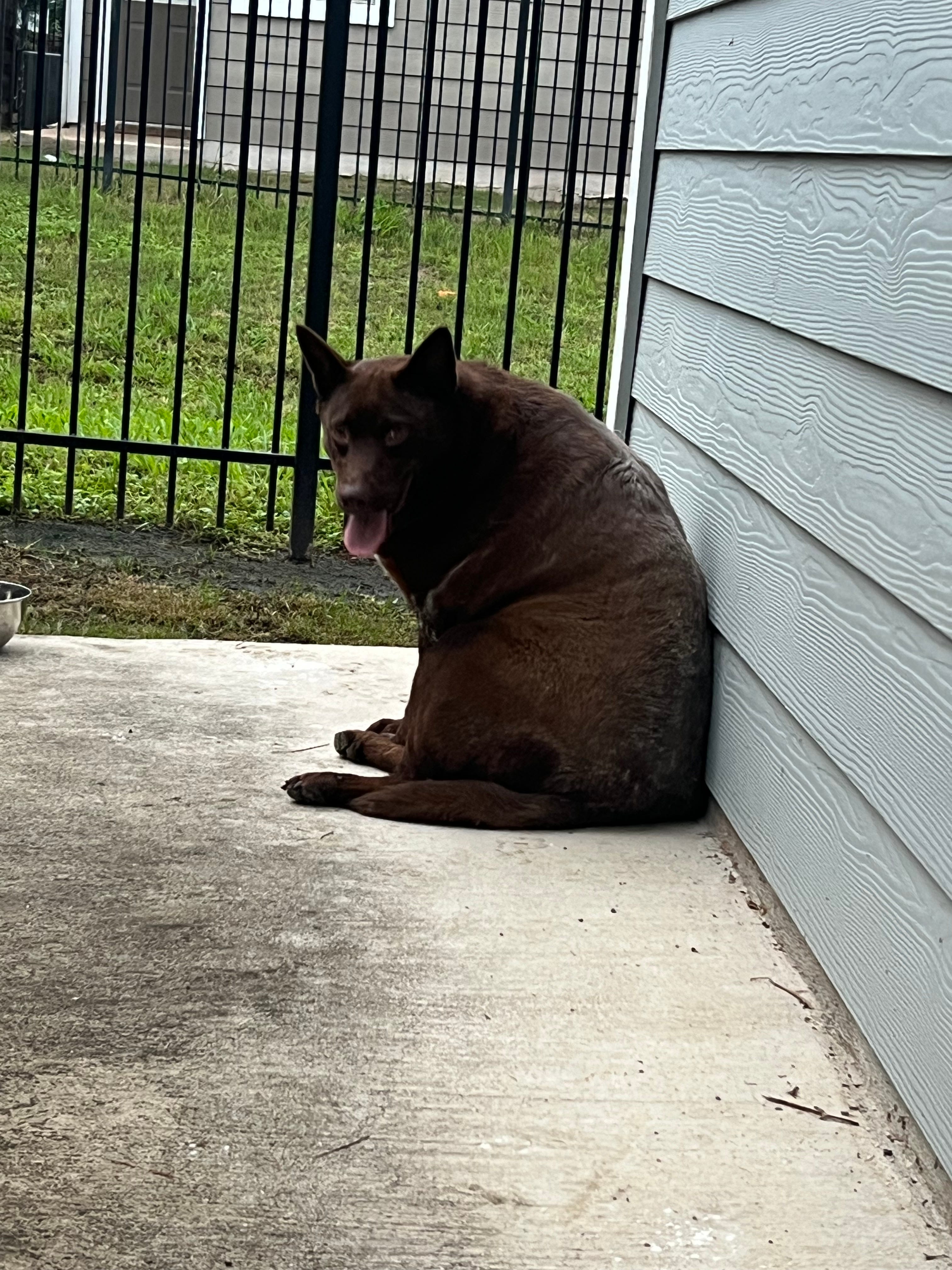
Now, I am definitely an animal lover, but to be honest, there are quite a few stray/free-roaming dogs running around Austin nowadays. Had I not been reading about the animacy of all beings, I may not have looked at that dog and asked “Who is this being? How is the spirit of Creation talking to me right now through this animal?” Timing. A mindset in a relatively mundane moment to be in relationship with nature and offer my service in gratitude for all the gifts Creation has given me. And I think that this is how the shift might happen. An offering. Slowly, over time, maturing daily. Like strawberries ripening in the summer. Timing.
To revel in the mundane, what’s still holding your attention over time, day-after-day?
Latest Podcast
Check out my latest guest feature on the Peace.Love.Hormones. Podcast with Maddie Miles. We dive into what animals are really doing on land and for our ecosystem health, Maddie’s health journey from vegan to omnivore, why you should be weary of billionaires controlling your food, the rise and fall of civilizations, and much more!
Wow, Jalene! This really presences the connection that’s possible. I love this: “Instead of asking ‘What is that?’ Indigenous languages ask ‘Who is that being?’ Instead of masculine/feminine grammar, it’s animate/inanimate grammar.”
Animism comes naturally to me and I often talk to the beings of forest and field, but this language adds a powerful new dimension. It brings to light for me the ways we are enculturated to view things as… things.
I’m excited to start using this new language with my 2 year-old who is just beginning to ask “Mama, what is that?”
The same work that wears out a machine can build strength and muscle in a living body. A broken machine has to be fixed, a broken body can heal itself (within reason). We've been treating the earth like a machine rather than the living organism that it is. Life can harvest the sun's energy and use it to regenerate and heal the earth. And a healthy earth makes healthy people. Thought-provoking article! Thanks!